Skip to content
Contact us
    Select language

    Disruptions to global trade highlight vulnerabilities in world fertilizer supply chains

    1 min read Fertilizer
    Published On 16 September 2026
    Written By

    Topsoe

    Last Reviewed On 16 September 2026
    global fertilizer supply chains

     Global trade has faced a number of huge shocks since 2020. Pandemics, armed conflicts and trade politics have changed supply chains and tested the resilience of economies and companies. More often than not, implications go well beyond what the consumer sees every day.  

    Global trade has faced a number of huge shocks since 2020. Pandemics, armed conflicts and trade politics have changed supply chains and tested the resilience of economies and companies. More often than not, implications go well beyond what the consumer sees every day.  

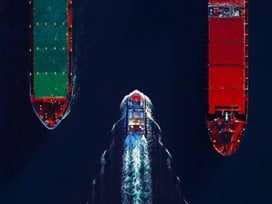
    Take the Strait of Hormuz as an example. While energy shortages and prices are a real and relevant concern, it was also, from the start, a food story. Around a third of the world's traded nitrogen fertilizer shipments move through the Strait of Hormuz, alongside close to half of seaborne-traded sulfur globally, the input phosphate fertilizer production depends on.  

    That combination is important because two separate fertilizer chains both pass through the same chokepoint. Natural gas feeds ammonia production, which in turn feeds nitrogen fertilizer; sulfur, independently, feeds the phosphoric acid used in phosphate fertilizer. An importer buying urea from one country and DAP (diammonium phosphate – a water-soluble fertilizer containing nitrogen (N) and phosphorus (P)) from another can look diversified on paper while remaining exposed at the feedstock and shipping-corridor level to the same region. 

    Countries importing the largest share of their fertilizer by sea from the Gulf include some of the world's least equipped to absorb a price shock, such as Sudan, Sri Lanka, Tanzania, Somalia and Pakistan. But even large agricultural exporters and importers with far deeper buffers, from Australia to Brazil to India, are also exposed.  

    The crop clock impact

    The reason the effect on food systems was initially under-discussed (at least beyond the world of financial analysis) is what many analysts have referred to as the "crop clock." Unlike oil, fertilizer can't simply be stockpiled against disruption at meaningful scale, and its value is tied to a narrow application window during planting.

     The disruption hit at a sensitive moment for farmers: major growing regions were approaching peak planting season just as the shock hit, and higher prices have reportedly already led some farmers to apply less fertilizer, or to switch to crops that need less nitrogen – the impact on yields in many cases will only become visible once harvest arrives. That mismatch between shipping timelines and biological ones helps explain a fertilizer disruption takes months to show up in yields and food prices.

    A JPMorgan report, Food Security Is National Security: A Compounding Storm, hit the news in August underlining the Strait of Hormuz food security issue, adding that the now likely and historic super El Niño could further weaken crop yields, constraining agricultural production in the first half of next year. This could mean, according to the report, food inflation of 5% in H1 2027 – and it could have more severe consequences for the over 2 billion people that suffer moderate or severe food insecurity. 

    Why diversifying suppliers may not be enough 

    A common response to supply shocks is to diversify suppliers, but this may not fully address this specific challenge. As long as a significant share of global fertilizer production depends on gas-rich regions and ammonia transport through a limited number of maritime corridors, supply exposure remains. The FAO's Chief Economist, Máximo Torero, framed the deeper issue during the crisis: the disruption "is not only an energy shock. It is a systematic shock affecting agrifood systems globally."  

    In short, ammonia is a key industrial input used to produce urea fertilizer, which in turn is a key determinant of crop production outcomes. Fertilizer application typically occurs at the start of a growing season, often months before crops are harvested. In some fertilizer-intensive economies, periods of reduced fertilizer availability or higher costs have meant declines in fertilizer use and, in certain cases, lower crop yields, reflecting a chain of dependencies linking gas supplies, shipping routes and agricultural production. 

    Price spikes during the crisis, however, have not yet led import-dependent countries to invest significantly in new supply outside the Gulf (Bloomberg, 2026), and policy support for lower-carbon alternatives arguably weakened rather than strengthened during the war. This may reflect governments and producers prioritizing near-term relief over structural change. Green fertilizer, in particular, remained more expensive to produce than its conventional counterpart even at the peak of the crisis, when commodity prices were at their highest (Bloomberg, 2026). This suggests a price shock, however severe, may not be enough on its own to make alternative pathways commercially competitive. Policy, investment and offtake are widely viewed as necessary conditions for unlocking the issue.

    Diversification beyond the Persian Gulf 

    The Hormuz situation presents a case for diversification through infrastructure investment and policy rather than market pressure alone to pull alternative pathways into competitiveness. FAO's own medium- and long-term recommendations explicitly call for scaling alternative fertilizer production technologies, including green ammonia, and for treating agricultural input security as strategic infrastructure. 

    Two pathways are at the front of the line – and they don't need to compete with each other. Grey and, where circumstances allow, blue ammonia, geographically diversified beyond the Gulf, is the nearer-term option, with lower near-term cost and complexity, with low-carbon/blue already narrowing the cost gap with conventional grey production in several markets. Green ammonia, made with renewable electricity rather than natural gas, remains costlier today, but can be produced wherever renewable resources are abundant, including close to the farms that ultimately depend on it. A resilient fertilizer system can be matched to local resources, economics and policy conditions. This moves away from a supply chain anchored to a single feedstock region, reducing that specific point of exposure. 

    Both pathways shorten the distance, geographically and structurally, between where fertilizer is made and where it's needed. Given how narrow the world's crop-application windows are, that kind of diversification could help reduce the risk to the next planting season. 

    Contact us

    Want to get to know us better - get in touch!

    Take a deeper look

    cover-temp-720x406

    Our solutions

    Explore our diverse range of proven solutions for transforming renewable resources into fuels and chemicals.

    cover-temp-720x406

    Knowledge and insights

    Stay ahead of the curve by continuously updating your knowledge of the latest energy trends.

    cover-temp-720x406

    Our technologies

    Delve into our different technologies for producing low-carbon and conventional fuels and chemicals as well as for ensuring clean air.

    cover-temp-720x406

    Our podcasts

    Join the conversation on renewable fuels and circular plastic with industry experts and influencers as they discuss emerging trends and best practices.

    cta-icon-1

    Get the latest

    Keep up with the latest news and inside stories from Topsoe.

    cta-icon-2

    Join our team

    We turn challenges into opportunities. Sound like something for you? Explore our current vacancies here.

    Topsoe_People_Pictures_-_Frederiksund_Outdoor_9_1