
Skip to content
Contact us
    Select language

    VK68: The power of no cesium

    Published On 10 November 2026
    Written By

    Topsoe

    Last Reviewed On 10 November 2026
    VK68 The power of no cesium | Topsoe

    For decades, cesium-promoted catalysts have helped sulfuric acid plants increase activity and reduce emissions. Our successful VK69 is one of them. It is being used in more than 130 plants worldwide. But changing cesium supply and geopolitical tensions have made the cost of cesium go up, causing great concerns among operators around the world. This has sparked the innovation of a new cesium-free catalyst: VK68.

    VK68 contains no cesium but still manages to achieve a catalyst activity on level with VK69 for temperatures above 400ºC. For many sulfuric acid plants worldwide, this new catalyst offers a cesium-free option that will make them better able to withstand the fluctuating cost of cesium and enable more operational freedom and greater cost control.

    We asked Martin Alvarez, Clean Air Solution Specialist, and Mårten Granroth, Product Line Director of our VK catalysts, to tell us the full story behind the no-cesium catalyst, VK68.

    Cesium and catalysts: the history

    Cesium-promoted catalysts have helped sulfuric acid plants reach high activity and low emissions for decades. The knowledge of cesium’s positive effect on catalyst performance dates back several decades, when the Topsoe R&D team established that cesium increases catalytic activity at low temperatures

    Building on this knowledge, VK69 was introduced in 1996 as the first cesium-promoted catalyst tailored for lean gas conditions. This sulfuric acid catalyst helps modern sulfuric acid plants meet stringent emission standards and achieve ever more demanding production targets.

    “VK69 delivered a step change in performance,” Mårten explains. “The combination of cesium, a new intrinsic material, an optimized melt composition, and the unique 9 mm daisy shape really took everything to new heights.”

    “This, of course, also proves that cesium alone is not the only factor that enables high catalyst performance, but it has a strong say in it. The design of the catalyst material itself, its composition and its physical shape all matter too,” Mårten explains.

    In recent years, the price of cesium has gone up, highly influenced by foreign trade politics and geopolitical developments, a limited number of suppliers and market demand. This has naturally created concerns in operations that rely on cesium-promoted catalysts, as they are facing extra costs.

    VK68: On the shoulders of decades of R&D

    The development of VK68 is a response to the sulfuric acid industry’s need for a catalyst that would make its operations less reliant on cesium, while not compromising on all the gains enabled by VK69.

    Martin explains: “VK68 is based on the fundamental knowledge and operational experience we have obtained from two of our existing sulfuric acid catalysts: VK69 and VK38+. Our R&D team looked at the key learnings from both and created VK68, a potassium-promoted catalyst.”

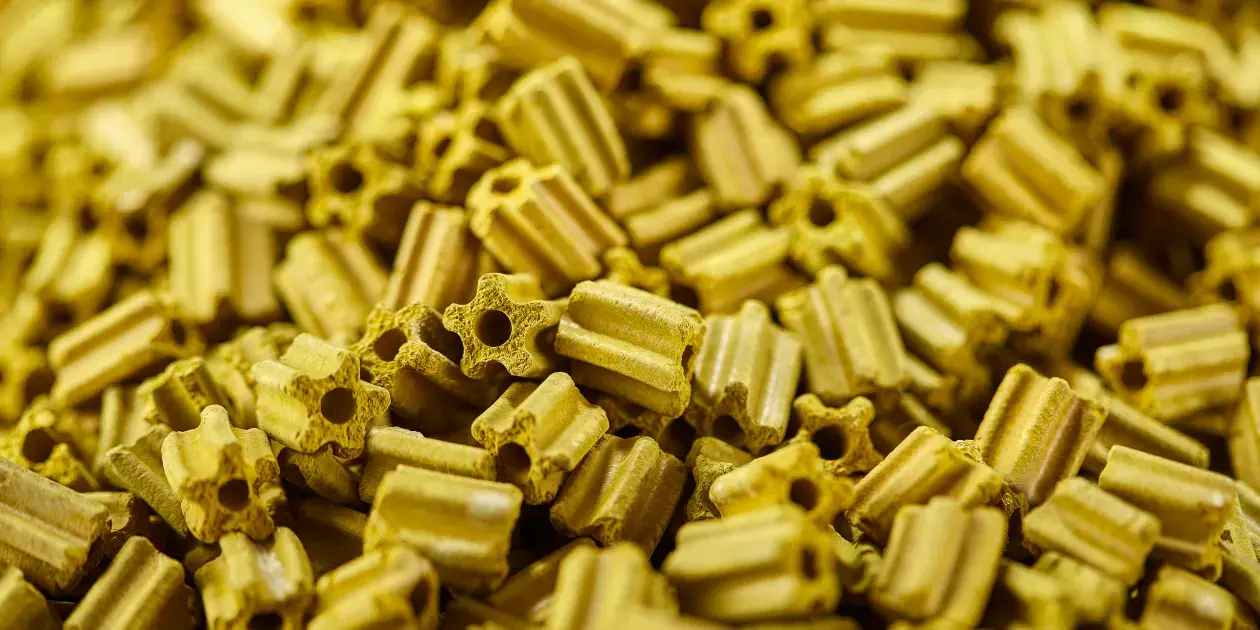
    The VK68 catalyst has the characteristic daisy shape like the other catalysts in the VK range.

    “The key to VK68 achieving catalytic activity like VK69 without cesium, is the tuning of its pore system. In simple terms, the catalyst’s internal structure is designed to support high performance through an optimal pore size distribution,” Martin continues.

    It is, however, important to take temperature into consideration. Cesium can still be necessary in operations below 400°C. From around 400°C, it offers activity comparable to VK69, and from 420°C, it matches VK69 under the relevant lean-gas conditions. Needless to say, it also outperforms conventional VK38 and VK38+ by a wide margin.

    “VK68 does not make cesium unnecessary in every situation. But it does give sulfuric acid plants another option for addressing the currently changing landscape of cesium’s cost and supply,” Mårten says.

    Case story: from testing to industrially proven

    VK68 already has its first full-scale references in a sulfur-burning plant in Asia. The customer wanted to increase production capacity without compromising emissions, but a solution with a cesium-promoted catalyst was not economically attractive.

    VK68 replaced the existing catalysts in the parts of the plants that operated in conditions suitable for VK68. After this replacement, sulfuric acid production increased by 14% per day without compromising emissions.

    “The measured performance of VK68 was close to, and in some cases better than, the performance we had observed in our testing environment,” Martin says.

    The customer also reported a smoother start-up, with stable operation achieved within six to eight hours, compared with more than 12 hours previously.

    Contact us

    Want to get to know us better - get in touch!

    Take a deeper look

    cover-temp-720x406

    Our solutions

    Explore our diverse range of proven solutions for transforming renewable resources into fuels and chemicals.

    cover-temp-720x406

    Knowledge and insights

    Stay ahead of the curve by continuously updating your knowledge of the latest energy trends.

    cover-temp-720x406

    Our technologies

    Delve into our different technologies for producing low-carbon and conventional fuels and chemicals as well as for ensuring clean air.

    cover-temp-720x406

    Our podcasts

    Join the conversation on renewable fuels and circular plastic with industry experts and influencers as they discuss emerging trends and best practices.

    cta-icon-1

    Get the latest

    Keep up with the latest news and inside stories from Topsoe.

    cta-icon-2

    Join our team

    We turn challenges into opportunities. Sound like something for you? Explore our current vacancies here.

    Topsoe_People_Pictures_-_Frederiksund_Outdoor_9_1