



Skip to content
Contact us
    Select language
    eREACT™ electrified syngas production | Topsoe

    eREACT™ electrified syngas production


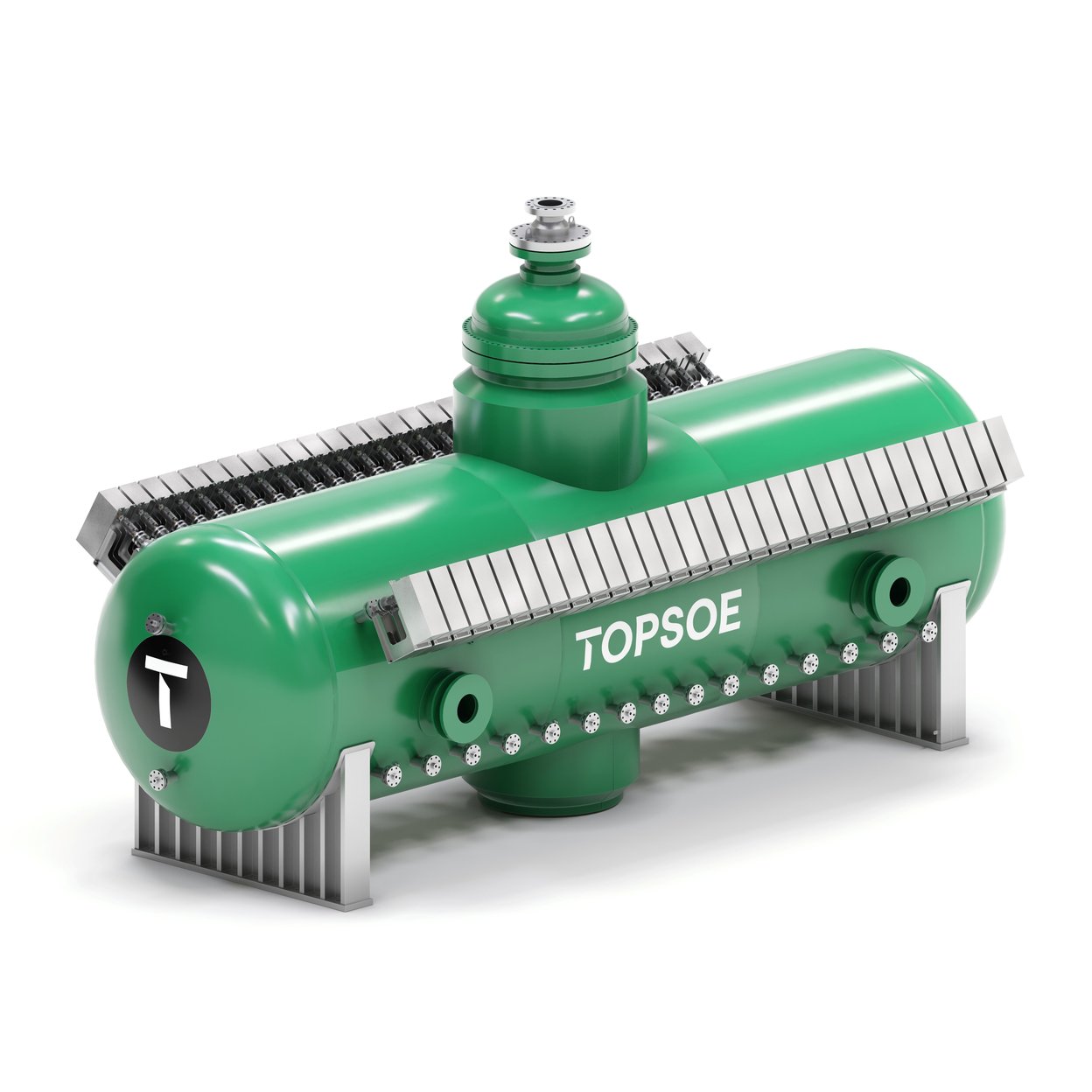
    eREACT is our electrified syngas technology for steam methane reforming (eSMR) and reverse water-gas shift (eRWGS). It is central to the manufacturing of hydrogen, ammonia, methanol, synthetic fuels and more. By replacing combustion with electric heating, eREACT helps producers improve carbon and feedstock efficiency, eliminate reformer flue-gas emissions and decarbonize syngas-based production.


    Block icon

    Near-stoichiometric feedstock utilization

    Block icon

    High electrical utilization

    Block icon

    20,000+ hours of pilot operation

    Block icon

    Built on 70 years of syngas expertise

    Why electrified reforming? | eREACT | Topsoe

    Why electrified reforming?


    Energy and carbon economics are changing fast. Conventional reforming uses gas both as feedstock and as the heat source, which exposes producers to fuel-price volatility, rising emissions costs, and lower utilization of valuable feedstock. eREACT helps decouple process heat from hydrocarbon feedstocks by replacing combustion with electricity. This supports a more efficient, cost-effective, and lower-carbon route to syngas production.

    Why producers use eREACT | Topsoe

    Why producers use eREACT


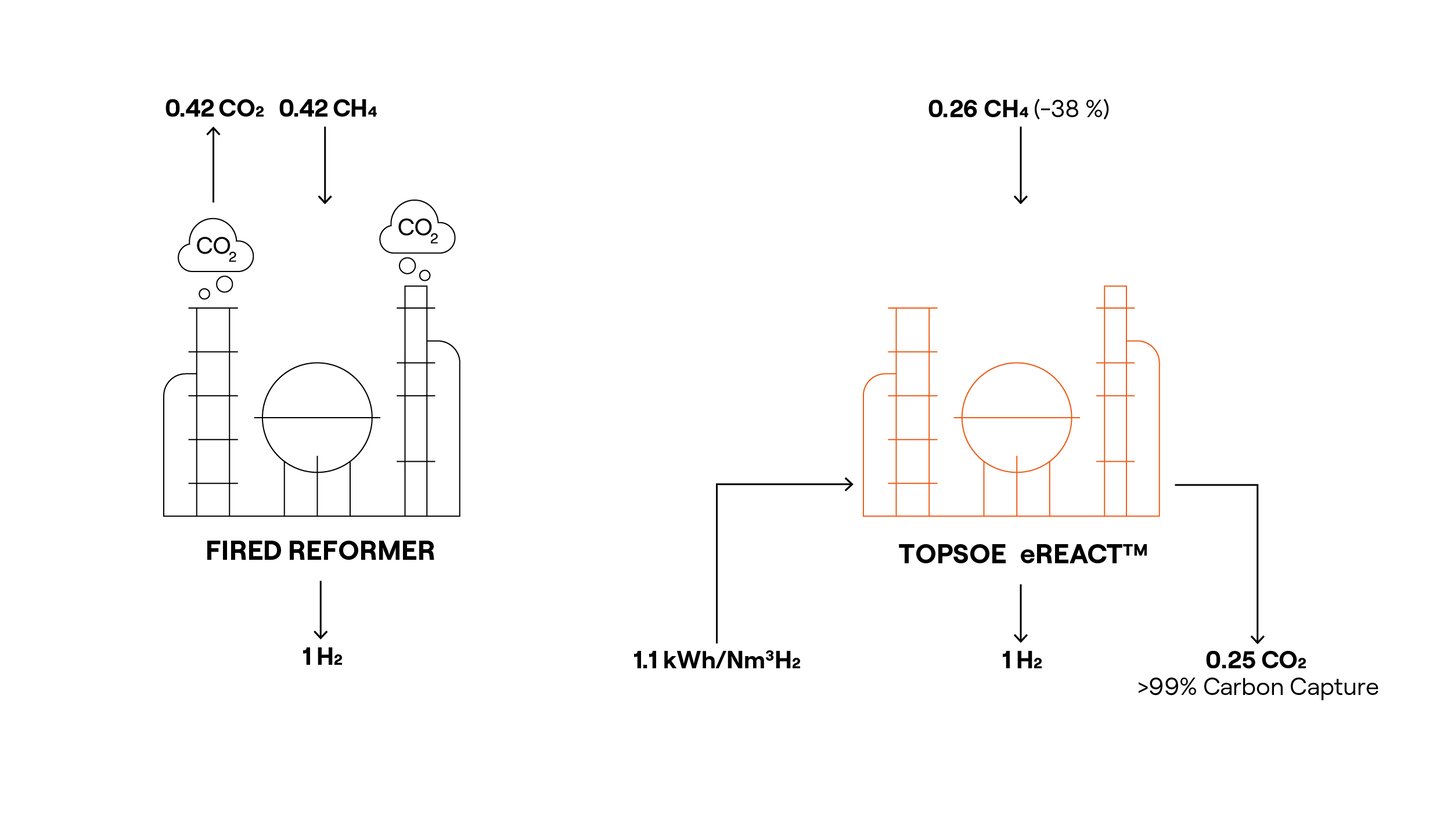
    eREACT replaces fired reforming with electrically generated heat. This allows more feed to be converted into syngas instead of being burned for process heat. When powered by renewable electricity, eREACT supports ultra-low-carbon syngas and hydrogen production.

    eREACT™ can be used for steam methane reforming (SMR) to produce conventional or low carbon hydrogen, ammonia, or methanol while maximizing feed utilization to typically 95% or above.

    eREACT has also enabled the development of a completely new process for producing e-fuels (e.g. e-SAF) from CO2, water, and (renewable) power with unmatched carbon efficiency and minimal power usage compared to any other known alternative.

    Where eREACT fits

     Wherever syngas plays a key role and carbon efficiency matters, eREACT is a fit. 

    Three key use cases, highlighting some of the syngas-based applications eREACT can support

    Biomethanol production

    Biomethanol production

    eREACT can reduce biomethane consumption by up to 35% and eliminates reformer flue-gas emissions.

    Blue hydrogen production

    Blue hydrogen production

    eREACT reduces natural gas usage by up to 40% vs conventional SMR while eliminating reformer flue-gas emissions.

    e-SAF production

    e-SAF production

    At equivalent CO2 emissions, eREACT cuts hydrogen use by 30-35% and power consumption by 10-15% compared to non-electrical RWGS routes.

    Proven with industry partners

    DLR

    Application: e-SAF / e-fuels demonstration

    Scale: ~2,500 tonnes/year of e-fuels output targeted

    At DLR’s Technology Platform Power-to-Liquid Fuels (TPP) in Leuna, Germany, we collaborate with DLR, Sasol and Griesemann to demonstrate an end-to-end route to e-SAF at semi-industrial scale. The platform integrates biogenic CO2, green hydrogen, Fischer-Tropsch synthesis, and eREACT-enabled syngas generation to optimize carbon utilization, process performance and product quality.

    Aramco

    Application: Low-carbon hydrogen

    Scale: 3 MW, targeting ~6 tonnes of hydrogen per day

    At Aramco’s Shaybah NGL recovery plant in Saudi Arabia, eREACT is developed as a pathway to low-carbon hydrogen by replacing fossil-fuel-based reformer heating with electrified heating. The project aims to reduce flue-gas emissions and lower gas consumption by up to 30%, while integrating palladium-alloy membrane technology for simultaneous hydrogen production and CO2 capture.

    NextFuel

    Application: Renewable methanol

    Scale: 150 MTPD / 50 kt/y design capacity

    NextFuel is developing a renewable methanol plant in Norway based on certified biomethane and CO2 for marine fuel applications. We support the project with integrated eREACT-based syngas generation together with methanol synthesis and distillation. This helps improve feed utilization and support a more efficient low-carbon methanol production.

    Your eREACT questions, answered 

    What is eREACT™?

    eREACT™ is a new approach to one of the world's most important industrial processes, syngas manufacturing. eREACT drives the same reactions as conventional reformers (e.g. SMR or RWGS reactors) but with one important difference: heating is achieved through direct electrical resistance heating of the catalyst and not by utilizing hydrocarbon feedstocks.

    eREACT is an integrated system with the hottest part centrally in the reactor. This enables a high-temperature operation up to 1000°C and a reactor energy efficiency up to 99%. This allows for an unmatched carbon efficiency of >95% and minimal (renewable) power usage compared to other known alternatives.

    What are the benefits of eREACT compared to conventional SMR?

    eREACT uses electricity instead of hydrocarbon feedstock (e.g. natural gas, biogas or green hydrogen) for reaction heating. This reduces feedstock consumption by up to 40% and eliminates flue gas production and associated emissions, while optimizing product yield.

    eREACT is an optimal choice for scarce sustainable feedstocks because it does not use feedstock for firing. This makes eREACT well-suited for e-fuels production, where it is used to drive Reverse Water-Gas Shift (RWGS) in connection with syngas production from hydrogen and carbon dioxide. 

    What can I produce with eREACT?
    eREACT is a versatile technology platform that can be integrated into any production pathway involving any quality of syngas production. It can convert almost any gaseous carbon feedstock to high-quality syngas, which offers producers high feedstock flexibility for production of a wide range of products – including hydrogen, ammonia, methanol, carbon monoxide and fuels. 
    When should I choose eREACT?
    eREACT benefits producers that either face volatile, high-cost natural gas supplies or are seeking to process more volume-constrained, higher-value feedstocks, such as biomethane, green hydrogen, and biogenic CO₂. In these cases, eREACT can reduce feedstock consumption by up to 40%, resulting in substantial OPEX savings.

    eREACT also benefits producers looking to reduce carbon emissions of their products, by eliminating the use of hydrocarbon feedstock for reaction heating and associated flue gas emissions. 
    How does eREACT reduce emissions?
    By using electricity for reaction heating, eREACT eliminates the use of hydrocarbon feedstock for reaction heating and associated flue gas emissions. Compared to conventional SMR, this can mean up to 40% reduction in total direct CO2 emissions (scope 1) generated per unit of syngas or hydrogen produced.

    For hydrogen production, this means up to 40% less CO2 generated per unit of hydrogen and a point-source CO2 stream than can be captured to achieve ultra-low carbon hydrogen. For processes that utilize the CO2 downstream, such as methanol production, this means near-zero CO2 emissions without requiring carbon capture within the process.
    How mature is the eREACT technology?
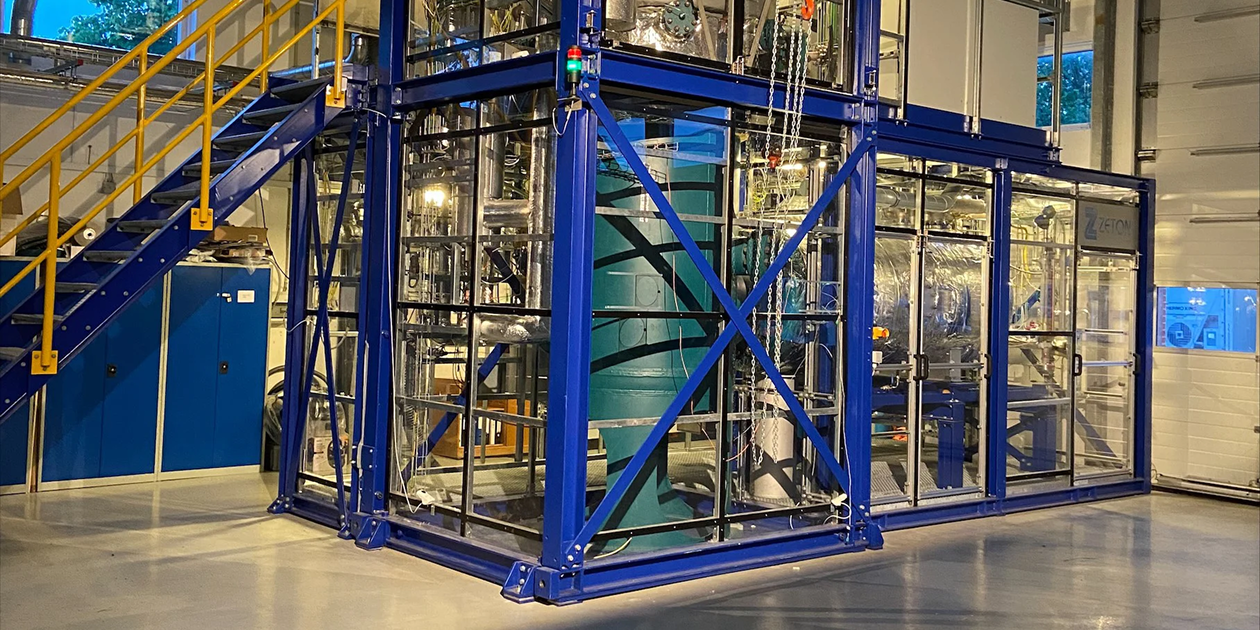
    eREACT has been demonstrated at pilot scale (+20,000 hours of operation since 2021), and the technology has been brought to TRL7, which means the system prototype has been successfully demonstrated in an operational environment. This has been confirmed by independent 3rd party technical due diligence as well as by multiple customers and their EPC partners.

    A full industrial demo e-SAF plant, that will utilize eREACT for syngas generation (eRWGS), is currently under construction with the German Aerospace Center (DLR) and partners.

    Learn more

    Hydrogen

    Hydrogen

    Our extensive experience guarantees the scalability and economic viability of your hydrogen project.

    SynCORTM - A Best-In-Class Technology-1

    SynCOR™ - A Best-In-Class Technology

    Step up your syngas production with SynCOR™ a next-generation autothermal reforming technology (ATR), previously known as A-ATR.

    G2LTM eFuels technology

    G2L™ eFuels technology

    The G2L e-fuels solution combines cutting-edge technological innovations with a commercially proven process to convert green hydrogen and CO2 into sustainable synthetic fuels and chemicals.

    Solution-level-soec-stack-interior-hero

    SOEC technology, ready at scale

    Our SOEC (solid oxide electrolyzer cell) is engineered for the highest efficiency of green hydrogen production at the lowest levelized cost. 

    Contact Us

    We wish to be transparent about our contributions towards solving global challenges and how we conduct our business in a responsible and sustainable manner.