Skip to content
Contact us
    Select language
    G2LTM technology

    e-Fuels

    Electrofuels, or e-fuels, are synthetic versions of conventional fuels. E-fuels have the same chemical properties as conventional fuels. That means they can be used as direct substitutes in existing infrastructure, enabling energy-intensive industries, such as heavy-duty transportation, aviation and shipping, to decarbonize and diversify their fuel sources. Set the future in motion with our e-fuel technologies and solutions today. 
    Contact us

    We offer a wide range of proven solutions for the production of e-fuels.

    Block icon

    Available, effective and scalable solutions for e-fuels.

    Block icon

    Build on 85 years of expertise.

    e-fuels transportation aviation

    e-Fuels defined

    Even in a decarbonized world, planes need to fly, trucks need to drive, and ships need to sail. And since they’re tough to electrify, they will still require fuel. This means fuel producers will need solutions providing lower carbon emissions. 

    Electrofuels, or ‘e-fuels’, are synthetic versions of conventional fuels (or fossil fuels). Having the same chemical properties as fossil-based fuels, e-fuels can be used as direct substitutes in existing infrastructure, enabling energy-intensive industries, such as heavy-duty transportation, aviation and shipping, to decarbonize and diversify their fuel sources.

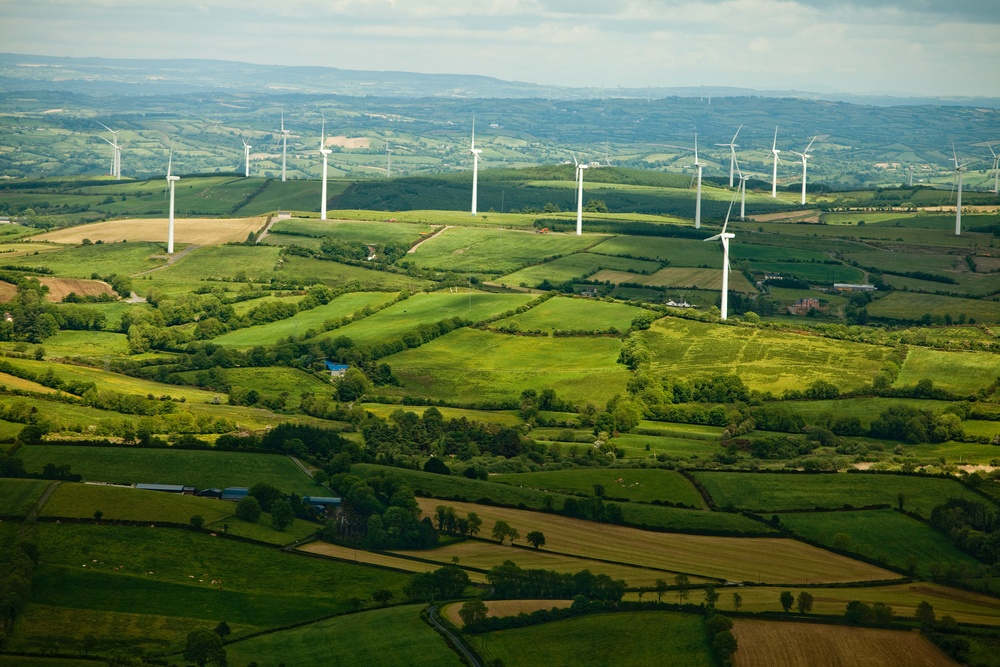
    Beautiful green landscape with windmills viewed from the air

    How are e-fuels produced?

    When producing e-fuels, the process typically starts with the generation of green hydrogen, which is produced by splitting water into hydrogen and oxygen using an electrolyzer powered by electricity from renewable energy sources. This green hydrogen can form the foundation for the production of its derivatives e-ammonia or e-hydrogen. 

    Alternatively, the green hydrogen can be combined with renewable C2 (captured from the air or industrial processes) and transformed into e-SAF, e-diesel, e-naphtha, e-methanol or into methane, the primary component of natural gas (e-NG). 

    With access to a power grid, an electrolyzer, and a steady stream of CO2, you can produce ready-to-use, certified drop-in fuels to power the future. 

    topsoe-welcomes-ines-kolmsee-and-susana-quintana-plaza-to-its-board-of-directors

    We’re here to help!

    We offer the market’s broadest and most effective portfolio for e-fuel synthesis technologies. Build on our 85 years of innovation and research, we have the depth and breadth of expertise to securely deliver your next e-fuels project.

    e-Fuels and the technologies for producing them

    There are many types of e-fuels, and we have the available, proven and scalable technologies for producing them. Explore our options below.  

    Green Hydrogen

    Green hydrogen (or e-hydrogen) is produced through electrolysis, using renewable electricity to split water molecules into hydrogen and oxygen. Use it directly in transport or refineries or as a building block for other e-fuels like e-ammonia, e-methanol, and e-NG.

    Green Ammonia

    Green ammonia (or e-ammonia) is produced by synthesizing green hydrogen and nitrogen. Ammonia is considered a gamechanger in decarbonizing the maritime industry and other energy-intensive industries. 

    e-Methanol

    Methanol is a versatile fuel that can be used in marine engines, road vehicles and as a feedstock in the chemical industry. Our ModuLite™ eMeOH plant is a winning methanol synthesis solution built on decades of industry leadership.

    e-SAF

    Produce sustainable synthetic fuels, including eSAF, from green hydrogen and biogenic CO2 with our G2L™ eFuels solution. Ready to decarbonize aviation!

    Carbon Monoxide

    eCOs™ installation can convert virtually 100% of your captured CO2 feedstock to CO. It is centered on our proven SOEC electrolysis technology and powered by electricity alone.

    e-NG

    e-NG is a drop-in replacement for fossil natural gas and can power homes, industries and vehicles. It is produced by using renewable electricity from sources like solar energy, wind, hydro, or nuclear energy to generate hydrogen.

    Technologies for e-fuels production

    Topsoe 1. udvaelgelse 18
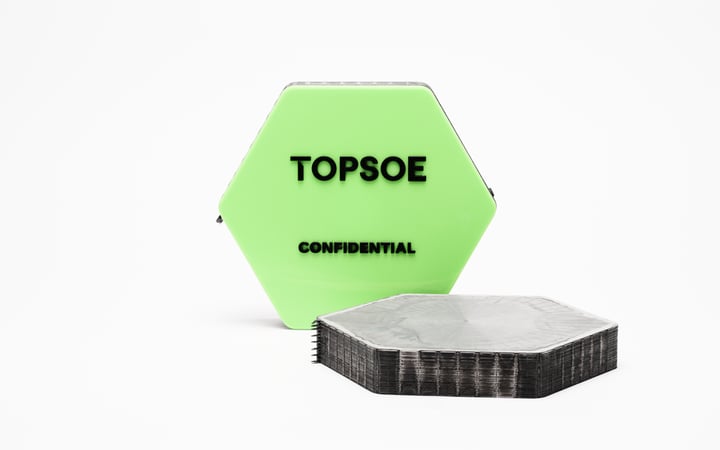
    Solide-oxide electrolyzer (SOEC)

    Our SOEC is the most efficient technology for green hydrogen production. Its efficiency is achieved by leveraging high-temperature electrolysis.

    Dive in
    Foulum-1
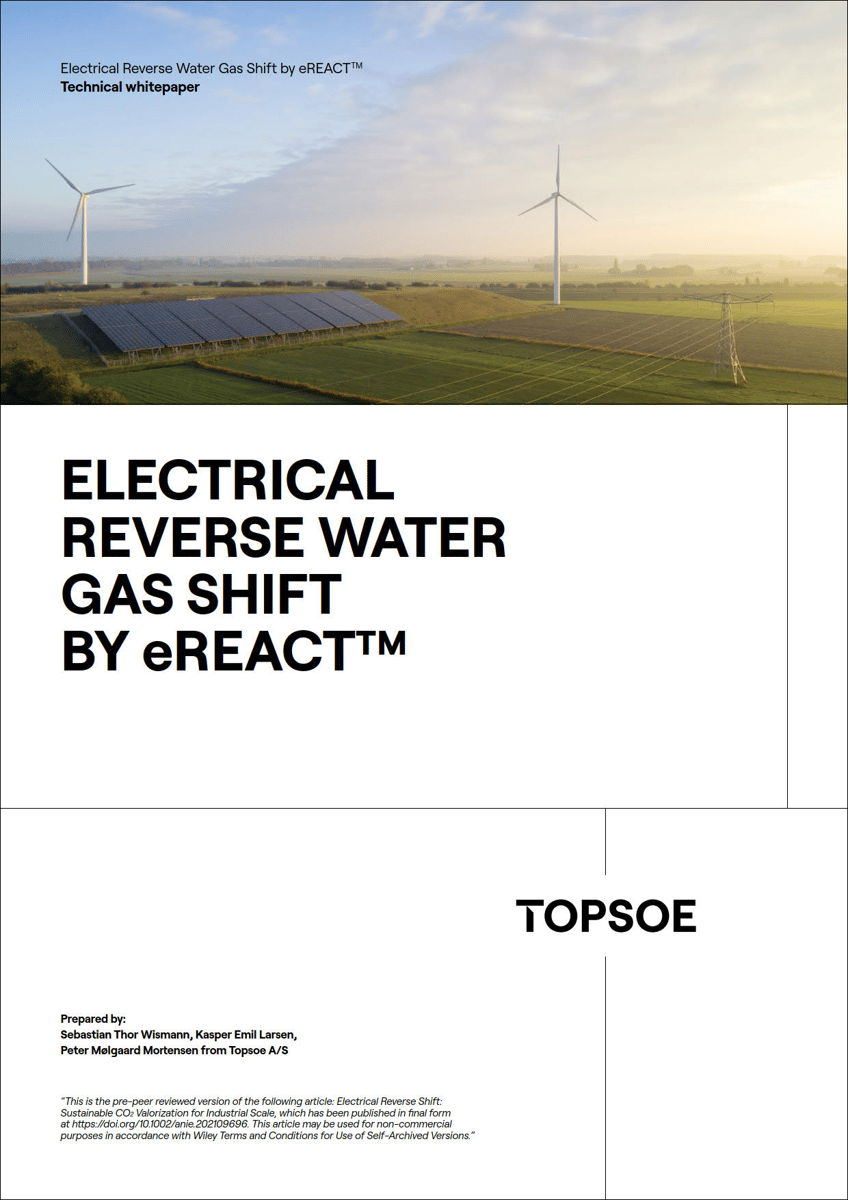
    eREACT™

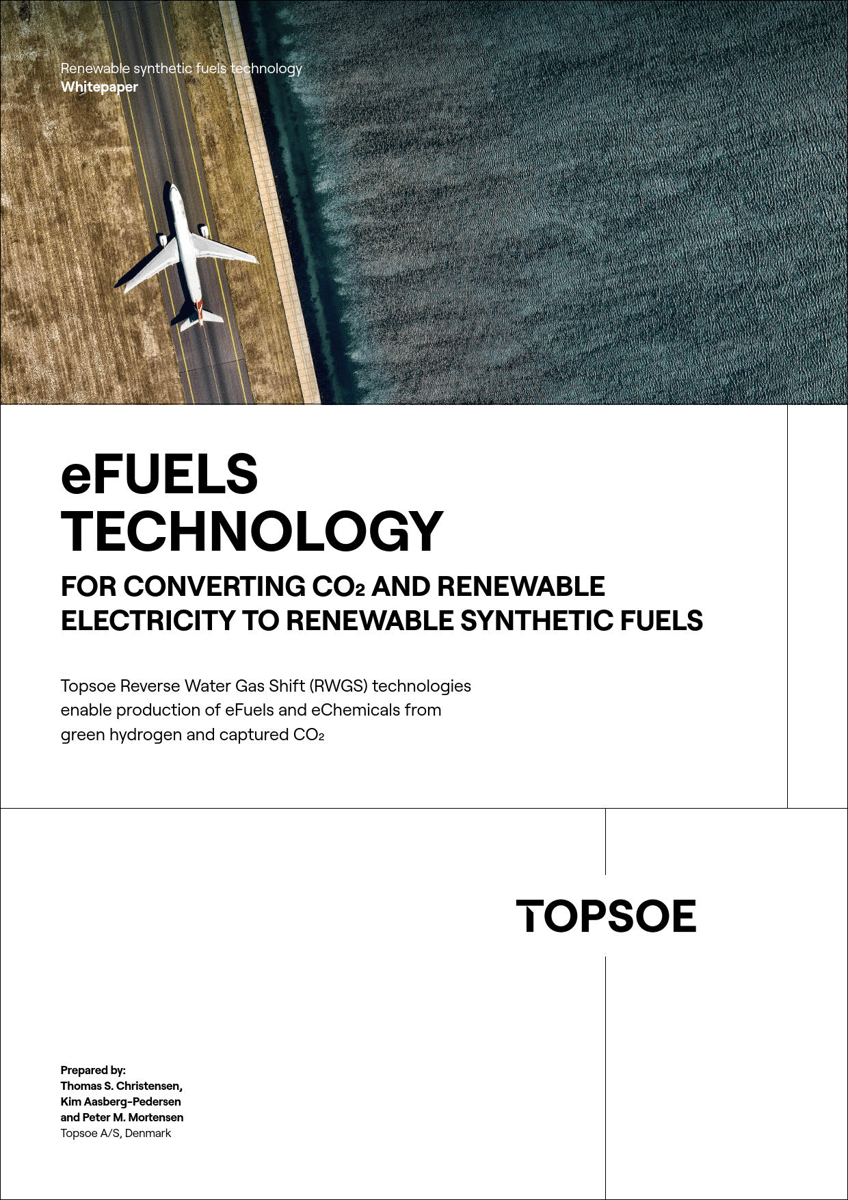
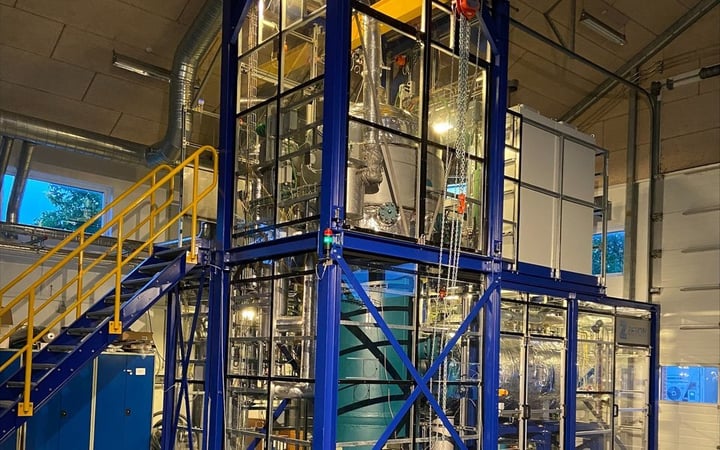
    Our eREACT™ technology is a reverse water-gas shift (RWGS) process that enables syngas production for e-fuels.

    Dive in

    FAQ: Why Fischer–Tropsch is a strong route for e-SAF production

    Why is Fischer–Tropsch a strong choice for maximizing e-SAF output?

    Fischer–Tropsch is a compelling choice when the objective is to maximize e-SAF production from available carbon and energy. In Topsoe’s G2L™ eFuels configuration, the FT route can deliver up to 12% more SAF for the same CO2 input compared with MTJ, helping developers get more jet fuel from the same carbon source. This makes FT especially attractive in projects where access to compliant CO2 is limited, strategic or cost-sensitive.

    How does Fischer–Tropsch support high CO2 utilization?

    A key strength of the FT route is its ability to convert more of the incoming carbon into jet fuel. In the G2L™ eFuels setup, FT delivers 12% more SAF for the same CO2 input than MTJ. This higher CO2 utilization directly supports stronger plant economics and improved resource efficiency, which are critical advantages as carbon sourcing becomes a central factor in e-SAF project development.

    What makes Fischer–Tropsch attractive from an energy-efficiency perspective?

    Energy efficiency is one of the most important differentiators in e-SAF production because hydrogen generation and overall power consumption are major cost drivers. The FT route produces 7–15% more SAF for the same energy input, depending on electrolyzer type. For project developers, that means a greater share of renewable power is converted into revenue-generating jet fuel, strengthening both competitiveness and long-term project value.

    Why does Fischer–Tropsch offer a strong cost position?

    Fischer–Tropsch combines strong yield performance with a simpler and more integrated process configuration. As a result, the levelized cost of SAF is 10–15% lower than MTJ. This cost advantage is driven by higher efficiency, fewer process steps and lower equipment count, all of which contribute to a more robust and bankable e-SAF business case.

    How does Fischer–Tropsch contribute to a more efficient product slate?

    For projects focused on aviation fuel, product selectivity matters. In the G2L™ eFuels configuration, FT is presented as producing 100% SAF, with possible naphtha co-product, while MTJ produces SAF together with a diesel blend component and possible naphtha. This makes FT especially attractive where the priority is to maximize SAF output and simplify the downstream product strategy.

    Why is Fischer–Tropsch well suited to centralized e-SAF plants?

    Fischer–Tropsch is particularly well suited to centralized e-SAF projects where developers want full control of the value chain. The FT route is positioned for centralized plants and full control of the value chain, while MTJ depends on decentralized methanol production and its associated supply-chain exposure. For many projects, this gives FT an advantage in integration, operational control and overall project reliability.

    How does Fischer–Tropsch support a strong business case for e-SAF projects?

    Fischer–Tropsch stands out because it combines the key value drivers that matter most in project development: higher yield, higher energy efficiency, lower cost, scalability, and simpler operation. In practical terms, FT offers:

    • Up to 12% more SAF for the same CO2 input.
    • Up to 15% more SAF for the same energy input.
    • 10–15% lower levelized cost of SAF.

    Together, these advantages help maximize output and revenue while reducing complexity and supporting execution confidence.


    Why is Fischer–Tropsch considered a scalable and proven pathway?

    Fischer–Tropsch benefits from decades of industrial heritage and is positioned as a scalable and proven technology for centralized plants at any scale. This maturity matters in e-SAF projects, where technology credibility, execution confidence and long-term operability are essential for investors, lenders and developers.

    What makes Fischer–Tropsch operationally attractive?

    Operational simplicity is a major differentiator. FT offers fewer process steps, which translates into lower complexity, reduced operational risk and easier project execution. In addition, FT can operate with hydrogen feed turndown to 20% capacity, supporting flexibility while maintaining a strong overall integrated plant concept.


    When is Fischer–Tropsch the preferred route for e-SAF?

    Fischer–Tropsch is the preferred route when the priority is to maximize e-SAF production and build a strong, scalable, and economically competitive project.

    It is particularly attractive when developers are targeting:

    • Maximum e-SAF yield.
    • High energy efficiency.
    • Lower levelized cost.
    • Centralized plant design.
    • A mature, industrially proven technology base.

    Related solutions

    renewable fuels

    Renewable fuels

    Our tried-and-tested technologies for renewable fuels production are based on decades of experience and science.

    Conventional fuels-1

    Conventional fuels

    Maximize your diesel, gasoline and jet fuel production with our cutting-edge hydroprocessing solutions for all crude-oil fractions.

    SAF Airplane runway-1

    Sustainable aviation fuel (SAF)

    Fasten your seatbelts. The take-off for cleaner skies starts now with our Sustainable Aviation Fuel solutions.

    Hydrogen learn more

    Hydrogen

    Our extensive experience guarantees the scalability and economic viability of your hydrogen project.

    various catalysts

    Catalysts for hydroprocessing

    Browse our full range of catalysts for hydroprocessing. 

    bofu-cta-row-image bofu-cta-row-image

    Contact us

    Do you have a question about our products or solutions? Or do you want to know how our technologies can support your business? Contact our experts today.

    Contact us